Microfluidics & Lab-on-a-Chip
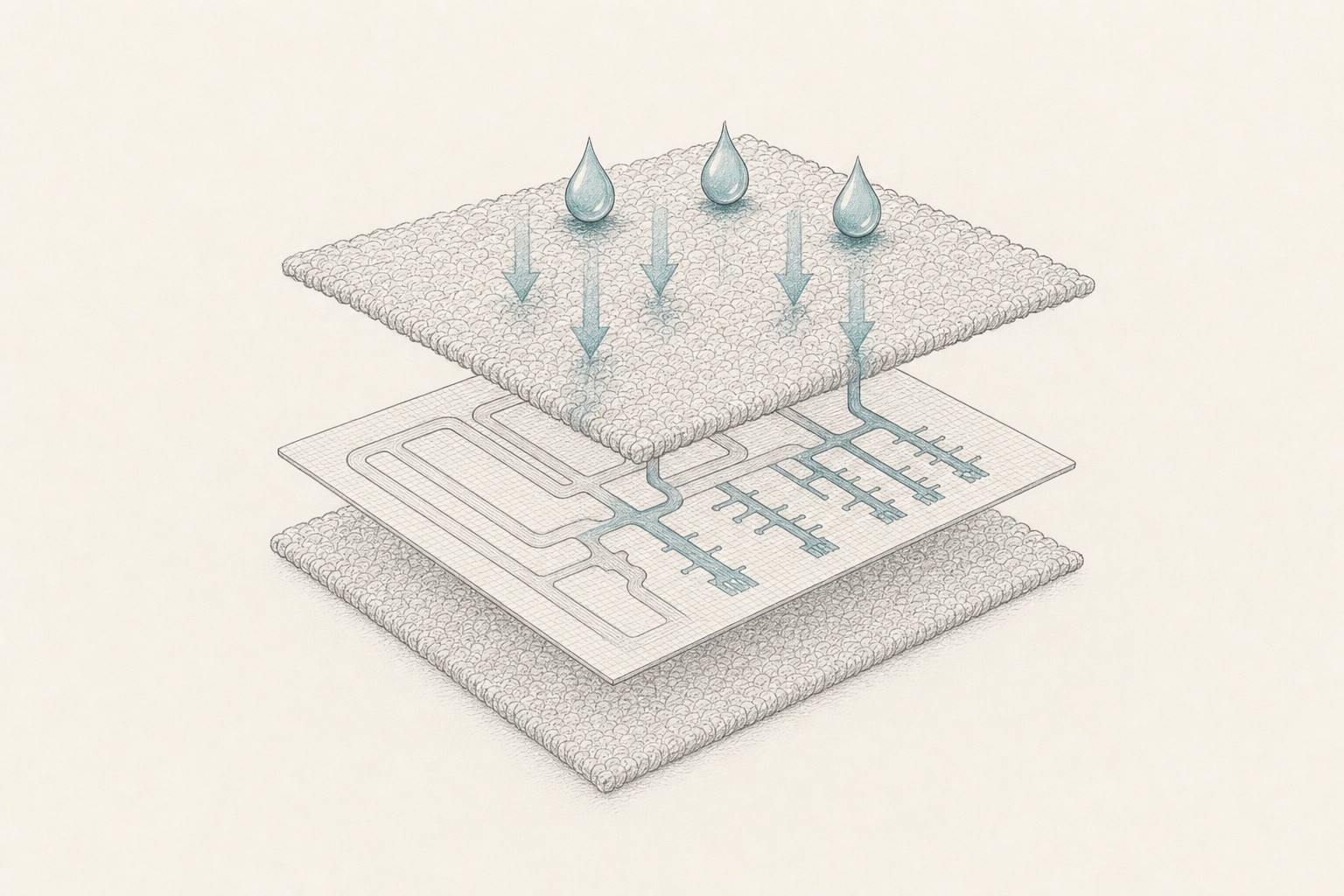
Designing and fabricating microfluidic devices for a wide range of applications, including clinical diagnostics, cell engineering, biosensing, wearable technologies, high-throughput screening, and water treatment.
Welcome to Malboubi Lab.
We engineer physics and biology into devices.
Explore our projectsInspired by the workings of nature, I apply the principles of mechanics and microtechnology to design devices that solve biomedical and engineering problems.
I am an experimentalist driven by the desire to find out how the world works, learn from it, and turn this knowledge into new things. My interest in physics is grounded in its real-world applications, and fabrication sits at the heart of how I think and work. I find genuine satisfaction in the journey from question to working prototype: conceiving a design, selecting materials and processes, building and testing the device, learning from what doesn't work, and refining it until it performs.
My background is in engineering, with a specialty in manufacturing, spanning traditional and advanced manufacturing methods, design for manufacture and assembly, and product design. I later moved into micro-, nano- and biofabrication, and my work now sits at the intersection of mechanics, materials, microfluidics and biology, investigating phenomena that are often too small, fast, or complex to observe directly. I design experiments, build measurement systems, and fabricate devices that render these processes visible and measurable. This has included studying how cells and their membranes respond to mechanical forces, developing microfluidic platforms to control and probe biological environments, and creating technologies for diagnostics, biosensing, cell engineering, and high-throughput screening.
I am currently an Associate Professor of Mechanical Engineering at the University of Birmingham Dubai, where I founded and direct a multidisciplinary Microfluidics Laboratory.
Our work spans several connected research areas across engineering and biomedical research. Explore the themes below, then visit Projects to see how they translate into active research and practical technologies.
See projectsDesigning and fabricating microfluidic devices for a wide range of applications, including clinical diagnostics, cell engineering, biosensing, wearable technologies, high-throughput screening, and water treatment.
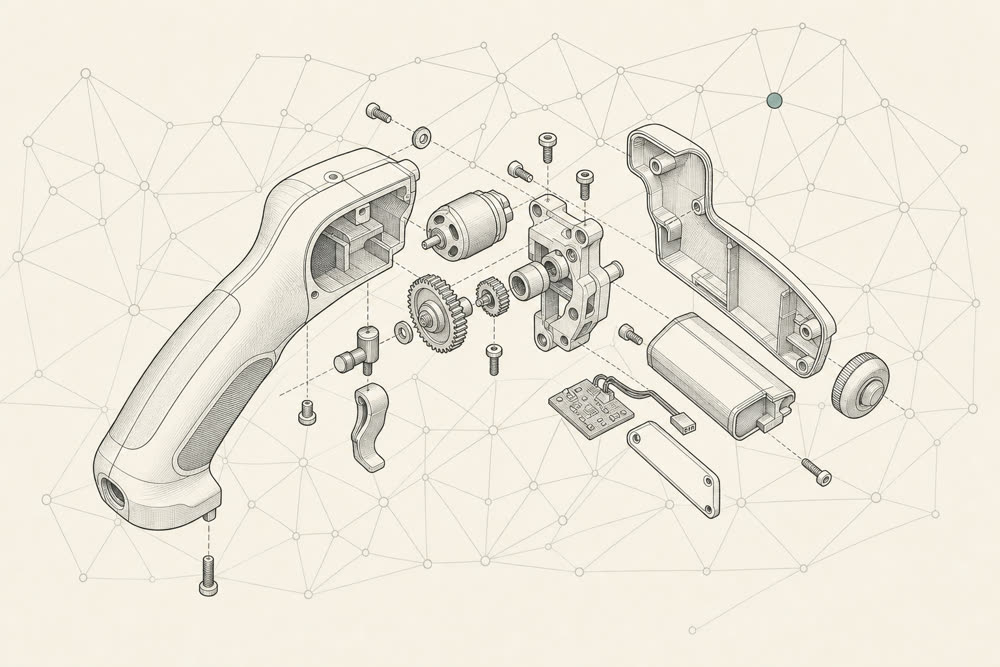
Applying Design for Manufacture and Assembly (DFMA), 3D printing, and advanced fabrication methods to develop practical, manufacturable biomedical and engineering products.
Using computer-aided design (CAD), finite element analysis (FEA) and computational fluid dynamics (CFD), plus molecular dynamics (MD), to model, analyse and optimise engineering and biological systems.
Investigating coupled electrophysiological and mechanical responses in neural membranes to understand the mechanisms underlying brain and spinal cord injury, and to inform potential therapeutic approaches.
Studying the mechanics of interactions between biological membranes and solid substrates that underpin gigaseal formation.
Investigating the physical behaviour of cells and tissues, including membrane mechanics, intracellular pressure, and cellular responses to mechanical stimulation.
Hands-on courses, workshops and guest lectures that build practical capability for students, educators, researchers and industry professionals.
From concept to working chip.
We take a fluid-handling idea and develop it into a tested, validated microfluidic prototype, ready for the next stage of development.
Before you commit to production.
We combine hands-on design expertise with computational modelling, including CAD, FEA, CFD and molecular dynamics, to catch performance and manufacturability risks early.
Faster prototypes, fewer surprises.
We use 3D printing and advanced fabrication methods to reduce material waste, assembly complexity, and prototype development time.
For early-stage ideas that need direction.
We help you move from a rough concept to a structured, evidence-led development plan, with a clear path toward prototyping and funding.
For programme quality and accreditation.
We provide practical, evidence-based guidance to strengthen academic standards and accreditation readiness.
Build real capability, not just theory.
Hands-on training for learners, educators, and professional teams, designed to build lasting practical skill, not just classroom knowledge.
Projects that bring research, design, and innovation into practice.
Our projects span Engineering, Microfluidics and Microfabrication, Cell Mechanics and Neurotrauma, and Nanotechnology.
Reverse-engineering wireless headphones with DFMA to consolidate components and replace screws with snap-fits, cutting part count from 98 to 42 and fasteners from 40 to 2.
Using DFMA and FEA to redesign a hair dryer's motor housing, front guard and hinge interface with a snap-fit feature, validated through SLA-printed prototypes.
Replacing an angled micro-hole nozzle geometry with a simpler two-part annular-gap design, validated by thermal analysis, CFD and a 3D-printed prototype.
Using finite-element analysis, computational fluid dynamics and molecular-dynamics simulations to model, analyse and optimise engineering and biological systems across multiple length scales.
Combining molecular dynamics simulations with micropipette-based experiments to reveal how liquid-mediated forces govern nanoflake alignment and self-assembly in confined nanochannels.
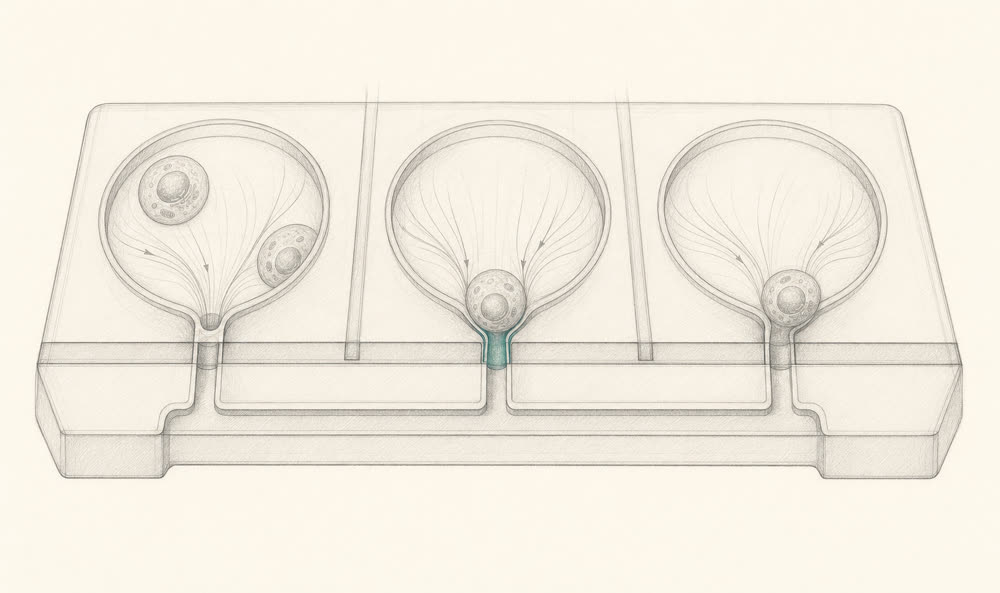
Engineering microscale fluidic environments for controlled experimentation across biology, chemistry and environmental science.
Creating precisely engineered devices for microfluidics, sensing and biomedical research across multiple length scales.
Investigating how affordable SLA 3D printing can reliably fabricate microfluidic devices with accurate, repeatable channel geometries.
Custom rigs combining microscopy, electrophysiology, AFM and microfluidics to study how mechanical, fluidic and ultrasound stimuli affect single cells.
Combining atomic force microscopy, optical microscopy, microelectrodes, microinjection and computational analysis to measure how cells deform, adhere and respond to mechanical force.
Applying controlled mechanical and ultrasound loading to individual neurons to study resulting changes in action-potential behaviour and electrical excitability.
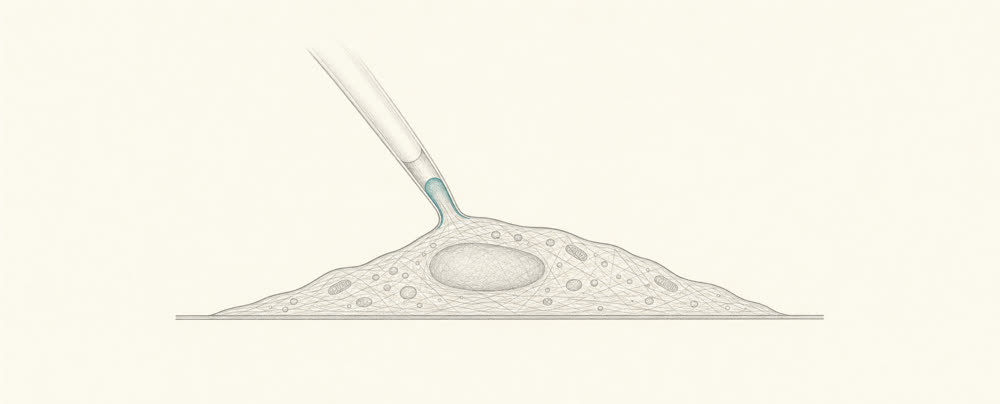
Improving gigaseal formation between micropipettes and cell membranes for low-noise, high-fidelity single-channel current recordings.
Combining bright-field, DIC, fluorescence, confocal and AFM imaging to resolve cellular structure and dynamics across scales, from tissue-level organisation to sub-cellular detail.
Using FIB milling to serially expose the nanoscale internal architecture of cryo-preserved cells.
Reconstructing 3D nanoscale surface topography from tilted SEM image pairs to quantify height, morphology and roughness.
Reconstructing a micropipette tip in 3D to reveal its internal geometry and nanoscale structure.


The researchers, students, and collaborators who make this work possible.
Graduates of the lab have gone on to build careers across academia and industry, carrying forward the skills they developed here into new challenges — including positions in advanced manufacturing and research and development, competitive internships with leading organisations, and progression to postgraduate study at top universities in the United States and around the world. The lab is currently home to a team of undergraduate and postgraduate researchers working across microfluidics, product design, and advanced manufacturing.
Collaborations span the United States, UAE, UK, and beyond, bringing together expertise from universities and companies in engineering, medicine, life sciences, advanced manufacturing, and microfluidics. Together, these partnerships advance research excellence and accelerate the development of new technologies.
Working with Dr. Majid Malboubi has been one of the most rewarding parts of my time at university. His ability to make complex engineering problems approachable while encouraging critical and independent thinking has had a lasting impact on me. Throughout my project, he consistently challenged me to think beyond the obvious solution and develop greater confidence in my own engineering judgement. Through his work in advanced manufacturing, microfluidics, and multidisciplinary engineering research, he fosters a culture of curiosity and innovation while remaining deeply engaged in the progress of his students and consistently encouraging them to push their work further. I am truly grateful for his mentorship and support throughout my academic journey.
Working in Dr Majid Malboubi’s laboratory was one of the most rewarding experiences of my Mechanical Engineering degree. Throughout my project, his guidance encouraged me to think beyond completing the project and develop a stronger research and engineering mindset. I strengthened my skills in engineering design, DFMA, CAD, simulation and additive manufacturing, while gaining confidence in independently exploring and justifying engineering decisions. His support pushed the work beyond my expectations, ultimately leading to our research being accepted for presentation at ICMR 2026 and publication in the Springer conference proceedings, an outcome I am incredibly proud of and grateful for.
Working in Dr. Majid’s laboratory was a transformative experience that profoundly shaped my approach to engineering. One of the most valuable lessons I learned was that complex projects don't need to be fully figured out from day one — clarity naturally emerges through continuous iteration and guidance. Throughout my capstone project, every design update, material choice, and physical test was grounded back to our core purpose: applying DFMA principles to maximize functionality and assembly efficiency. Furthermore, Dr. Majid helped facilitate a key industrial internship at a renowned manufacturing company following an insightful facility visit. This hands-on experience was instrumental in building a strong, professional CV, directly leading to graduate interviews and securing my current engineering position. The supportive environment and high-standard mentorship in the lab truly bridge the gap between academia and industry.
We are always interested in connecting with talented, motivated people who want to explore new challenges and help transform ideas into practical outcomes.